
What is wing loading?
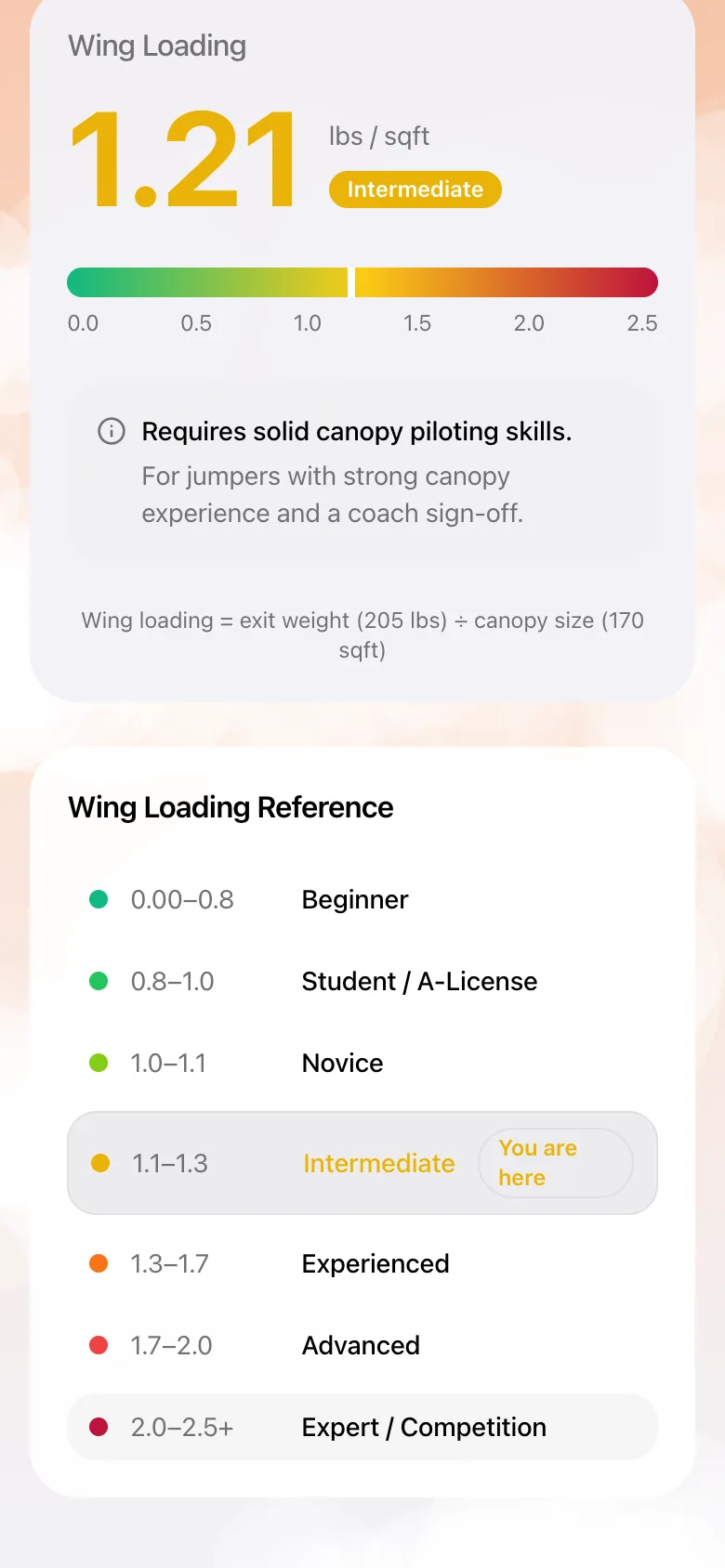
Wing loading is your exit weight divided by the area of your canopy. Exit weight is your body weight plus everything you wear and carry on the jump: rig, jumpsuit, helmet, shoes, altimeter and so on. Canopy area is in square feet. The result is in pounds per square foot.
The formula
Wing loading = exit weight (lb) ÷ canopy size (ft²). If you weigh yourself in kilograms, multiply by 2.2046 to get pounds first.
A worked example
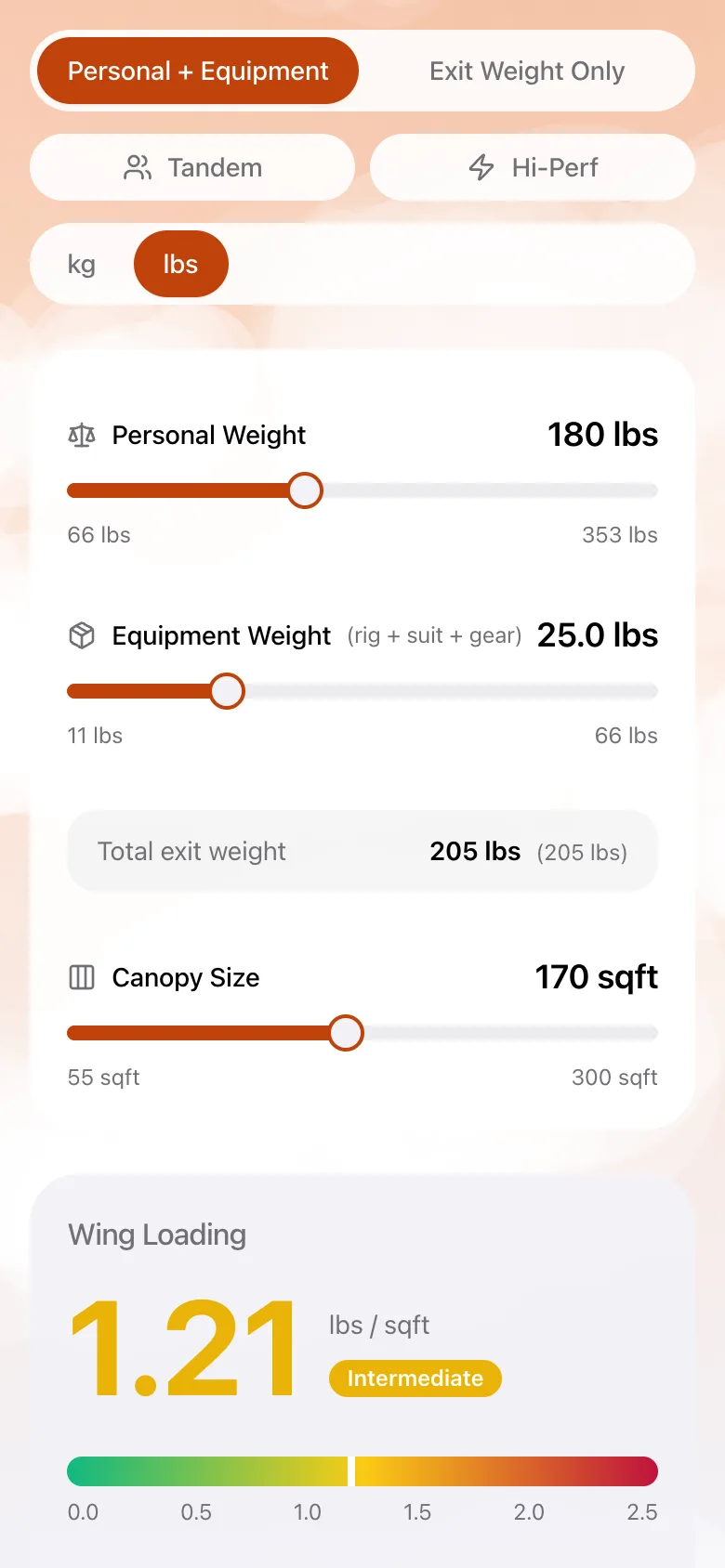
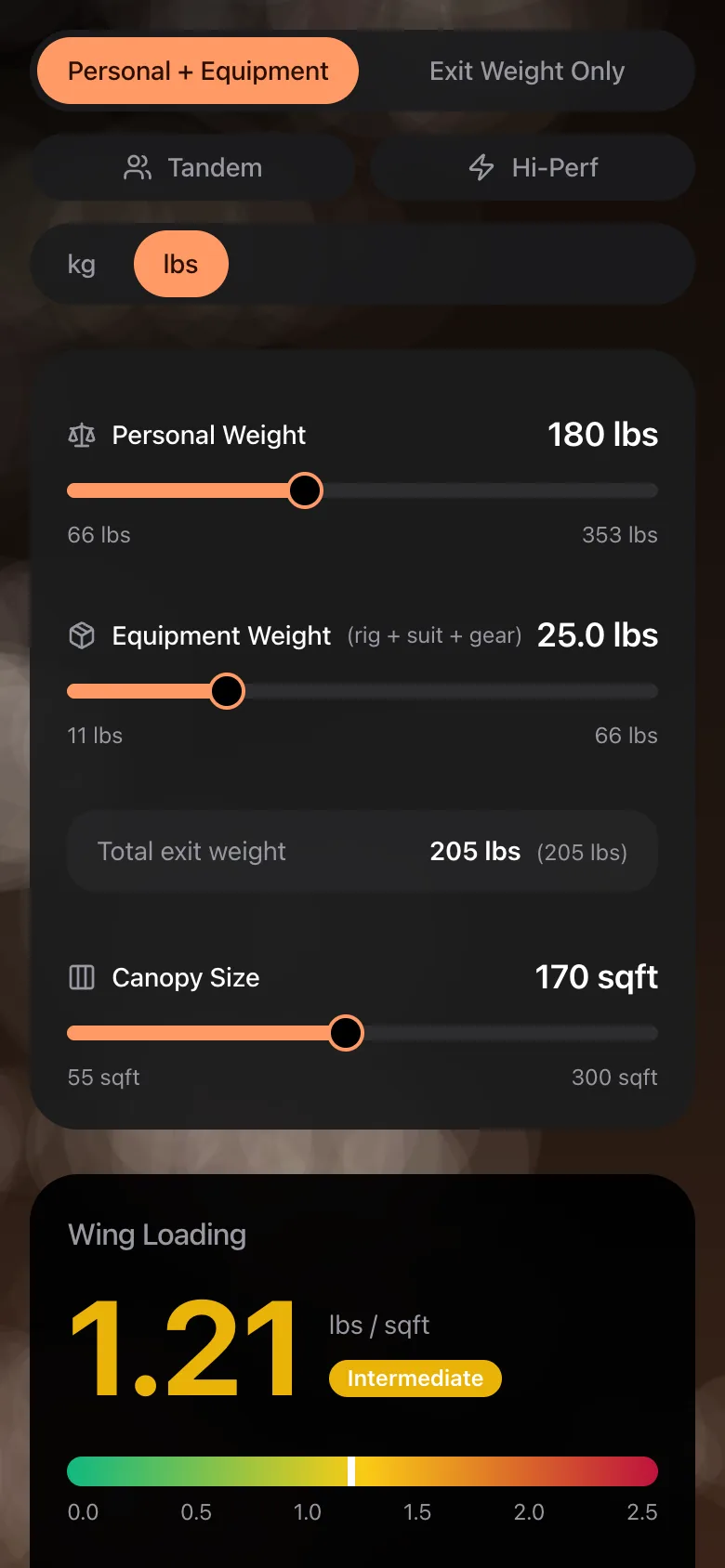
- Body weight 180 lb plus 25 lb of gear gives an exit weight of 205 lb.
- Under a 170 ft² canopy: 205 ÷ 170 = 1.21.
- Under a 190 ft² canopy: 205 ÷ 190 = 1.08. The same jumper, a bigger canopy, a lower wing loading.
Why gear weight matters
People often use body weight only and get a number that is too low. A rig, jumpsuit and helmet can add 20 lb or more. Weigh yourself dressed and rigged, or use a realistic estimate, so the number reflects what is under the canopy.
What wing loading does not tell you
The same wing loading flies very differently under different canopies. Canopy design, condition, density altitude and wind all change how a canopy behaves, and so do your skills. The number is a starting point for a conversation with an instructor or canopy coach, not a permission slip to move to a smaller canopy.
What does help is a record. If you log the canopy on every jump, your logbook shows how many jumps you have made on each canopy and size, and when. That dated history is something to bring to your instructor or coach when you talk about canopy progression, and it is much more useful than a single number.
This guide is informational only and is not a substitute for instruction. Follow your instructor, your coach and the guidance of your national association when choosing a canopy.
Try it
Use the free wing loading calculator to work out your number from your body weight, gear weight and canopy size, in kg or lb. It runs in your browser on your phone or computer, and you do not need an account.
Open the wing loading calculatorFrequently asked questions
- How do you calculate wing loading?
- Divide your exit weight in pounds, which is body weight plus gear, by your canopy area in square feet. For example, 205 lb under a 170 ft² canopy is a wing loading of 1.21.
- What counts as exit weight?
- Your body weight plus everything you wear and carry on the jump: rig, jumpsuit, helmet, shoes, altimeter and any other gear.
- Does the same wing loading feel the same on every canopy?
- No. Canopy design, condition, density altitude and wind change how it flies, and so does the pilot's skill. Talk to an instructor or canopy coach before choosing a canopy.